Key Takeaways
- Level 1 charging uses a 120V household outlet and typically adds 4-5 miles of range per hour.
- Level 2 charging uses a 240V connection, adds about 25-40 miles of range per hour, and can recharge an EV in 3-8 hours.
- Level 1 charging may be sufficient for drivers traveling less than 30-40 miles per day, while Level 2 better supports long commutes and frequent driving.
- A Level 2 charger and professional installation can cost $500-$2,000 in total, although utility and state incentives may reduce the expense.
Choosing the right EV charger can feel like a daunting task, especially when you’re weighing the options between Level 1 and Level 2 chargers on top of all kinds of other factors. But understanding their key differences, benefits, and ideal use cases can make the decision much easier. In this guide, we’ll break down what separates Level 1 and Level 2 chargers and help you determine which one is the perfect fit for your car and home.
Introduction to EV Charging Levels
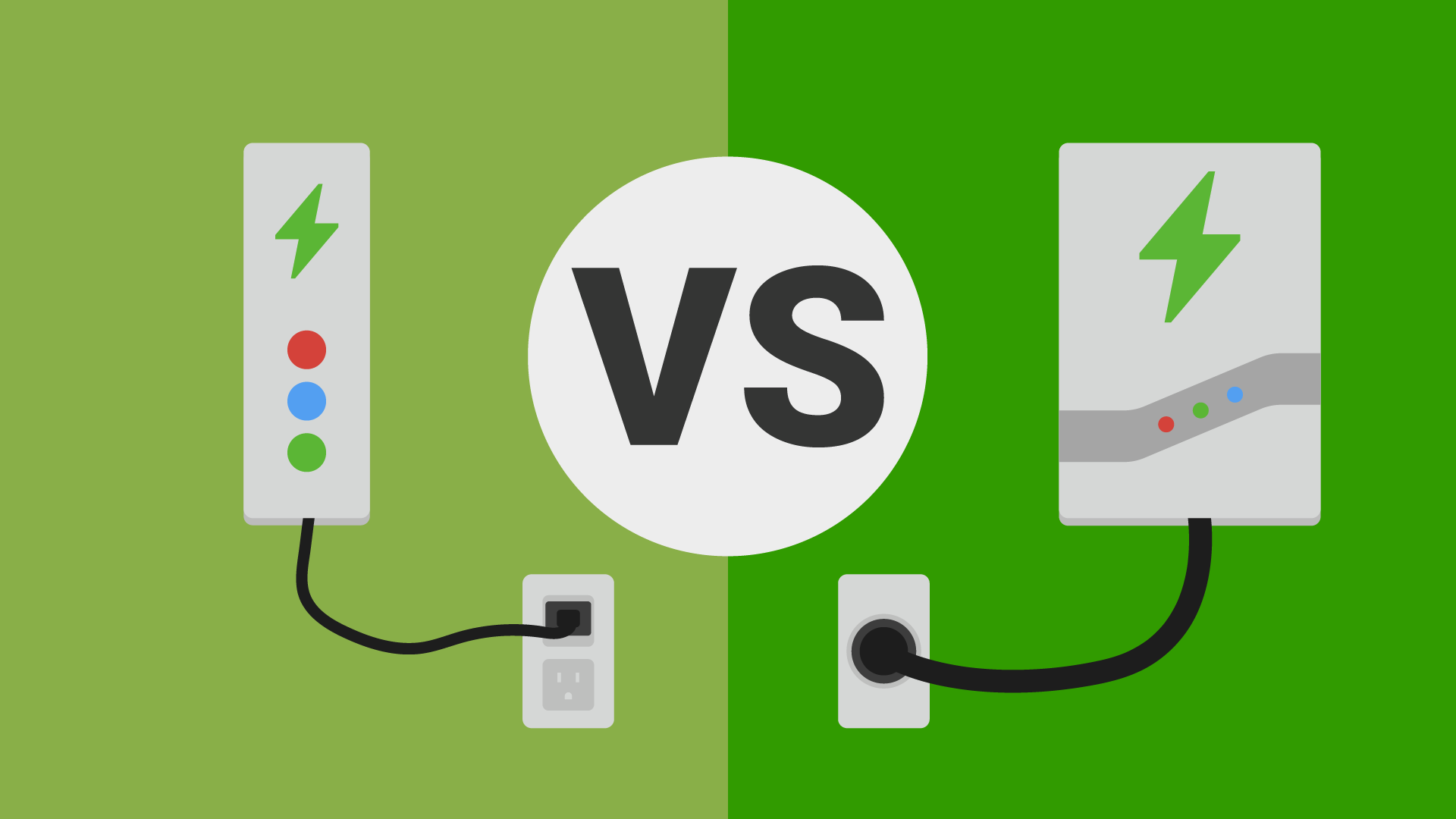
Home EV chargers are categorized into two levels based on their charging speeds, current type, and infrastructure requirements: Level 1 and Level 2 charging. In a nutshell:
-
Level 1 charging relies on a standard household outlet, and plugs in just like most appliances in your home.
-
Level 2 charging operates using a 240V outlet or hardwired connection, delivering significantly faster (up to 9x) charging speeds.
When it comes to the most important specs, here’s how level 1 and level 2 chargers compare:
| Features | Level 1 | Level 2 |
|---|---|---|
| Voltage | 120V | 240V |
| Charging Speed | 4–5 miles of range per hour | 25–40 miles of range per hour |
| Charging Time | 24-48 hours (empty to full) | 3–8 hours (empty to full) |
| Installation | None required | Requires 240V NEMA outlet or hardwire setup |
| Cost | Free (with included charger) | Hardware costs $300–$700 + installation |
| Ideal User | Light daily drivers | Frequent drivers or long commutes |
While both options can charge your car, their applications, performance, and costs differ significantly. Let’s break down each level.
Level 1 Charging: Standard, No-Frills EV Charging
Level 1 charging uses a standard 120-volt home outlet, and most EV manufacturers include a Level 1 charger with their cars. It’s plug-and-play, ideal for those who don’t drive long distances or only use their EV for daily commuting. It’s best suited for EV owners who drive less than 30–40 miles a day and have plenty of time to charge their vehicles overnight.
Pros of level 1 charging:
-
Convenient: Requires no additional setup; you can plug it into any standard outlet.
-
Accessible: Great for those who use their cars sparingly, such as second vehicles.
-
Low cost: No additional hardware or installation expenses.
Cons of level 1 charging:
-
Slow charging speeds: Typically adds about 4–5 miles of range per hour. Fully charging a depleted battery can take 11–20 hours.
-
Limited to light usage: Unsuitable for long commutes or frequent drivers who need faster charging times.
Level 2 Charging: Faster, Smarter, and More Efficient
Level 2 charging operates on a 240-volt outlet, similar to those used by washers or dryers. It delivers significantly more power and thus charges your vehicle much faster. This makes it ideal for frequent drivers, households with multiple EVs, and anyone looking for a quick, efficient way to charge their vehicles overnight. Plus, many level 2 EV chargers come standard with smart features that level 1 options don’t have, like charge scheduling.
Pros of level 2 charging
-
Faster charging: Adds 25–40 miles of range per hour. Fully charging an EV may take as little as 3–8 hours.
-
Ideal for daily drivers: Perfect for those with longer commutes who need quicker turnaround times.
-
Smart features: Many Level 2 chargers come with advanced options like scheduling, power monitoring, and wireless app control.
Cons of level 2 charging
-
Higher initial costs: Equipment and installation range from $500 to $2,000 all-in, depending on your electrical setup.
-
Requires setup: Needs a dedicated 240V circuit and often requires an electrician for installation.
Installation and Costs
Level 1 charging setup
No installation is required. Simply plug into any standard outlet. However, make sure the outlet is on a dedicated breaker to avoid overloading your electrical circuit.
Level 2 charging setup
Level 2 chargers require professional installation of a 240V outlet. Electrical wiring and potential upgrades to your breaker panel can add to installation costs.
Average costs:
-
Charger cost: $300–$1,000 for the equipment.
-
Installation: $500–$1,500, depending on your home’s electrical system.
Some utility companies and states offer rebates or incentives to offset these costs. Be sure to check any local incentive programs before moving forward.
Installing an Emporia charger? Check out this list of local incentive programs that can save you money on one of our best-in-class level 2 chargers.
How To Choose Between Level 1 and Level 2 Charging
When deciding between Level 1 and Level 2 EV charging, consider these five factors to determine which option best suits your needs:
-
Daily driving distance: Do you have short daily commutes? Level 1 may work for you. Longer routes make Level 2 a better option.
-
Time availability: If you have 12+ hours to charge overnight, Level 1 could work. For faster charging, Level 2 might make more sense.
-
Home setup: Check whether your home has an existing 240V outlet or if additional electrical work is required for Level 2 installation.
-
Budget and price sensitivity: Level 1 involves no upfront costs. Level 2 chargers have higher costs but may save time and be more convenient in the long run, especially because faster charge times with a Level 2 charger means you can usually get a full charge during less expensive utility rate times (off-peak pricing).
-
Future-proofing: With EV adoption on the rise, investing in a Level 2 charger can prepare you for additional EVs or resale value of your property. If you’re a light driver with minimal charging needs, Level 1 could be all you need. But if you want faster charging, a smarter setup, or plan to rely heavily on your EV, investing in a Level 2 charger is the way to go.
At Emporia, we make upgrading to Level 2 charging easy and affordable. Whether you choose the Classic or Pro EV charger from Emporia, you’re making a smart investment in your home charging setup. The Classic offers award-winning performance at an accessible price point of $449, perfect for homes with newer electrical panels seeking reliable EV charging. Plus, if you want to add advanced energy management features like Excess Solar Charging you can always pair a Vue Energy Monitor with the Classic charger down the line.
For those needing more advanced energy management or homes with older electrical panels that can’t handle a charger installation, the Pro’s $599 price tag delivers exceptional value through PowerSmart technology, excess solar integration, and peak demand management. Both chargers reflect Emporia’s commitment to making home EV charging simple, efficient, and adaptable to your specific needs.
Start charging smarter at home.
Shop our award-winning Level 2 home chargers and start saving.