Key Takeaways
- Many EV owners can save $300-$800 per year by moving charging to lower-cost off-peak hours.
- An EV driven 12,000 miles per year at 4 miles per kWh uses about 3,000 kWh annually.
- At $0.20 per kWh, 3,000 kWh costs $600 per year, while the same charging at $0.06 per kWh costs $180, a $420 annual savings.
- Peak periods commonly run from about 4-9 p.m. on weekdays, while off-peak pricing usually applies overnight, early in the morning, and on weekends.
- A smart charger can automatically delay charging until off-peak rates begin without changing when the driver plugs in.
Most electric vehicle owners are unknowingly overpaying for every charge. While you made the smart choice to go electric, you could be leaving hundreds of dollars on the table each year simply because of when you plug in. The solution? Understanding time-of-use rates and harnessing the power of off-peak charging.
Here’s the truth: charging during peak hours can cost significantly less for the exact same electricity, and you can potentially save thousands of dollars by avoiding those expensive times. Smart charge timing isn’t just about saving money; it’s about switching your EV from a simple transportation upgrade into a powerful tool for both your wallet and the environment.
Understanding Time-of-Use (TOU) Rate Plans
Time-of-use rates are what they sound like: electricity pricing that changes based on when you use power. Instead of paying a flat rate 24/7, utilities are introducing innovative rate structures that adjust the amount you pay for electricity over the course of the day to better reflect the real cost of generating and delivering power.
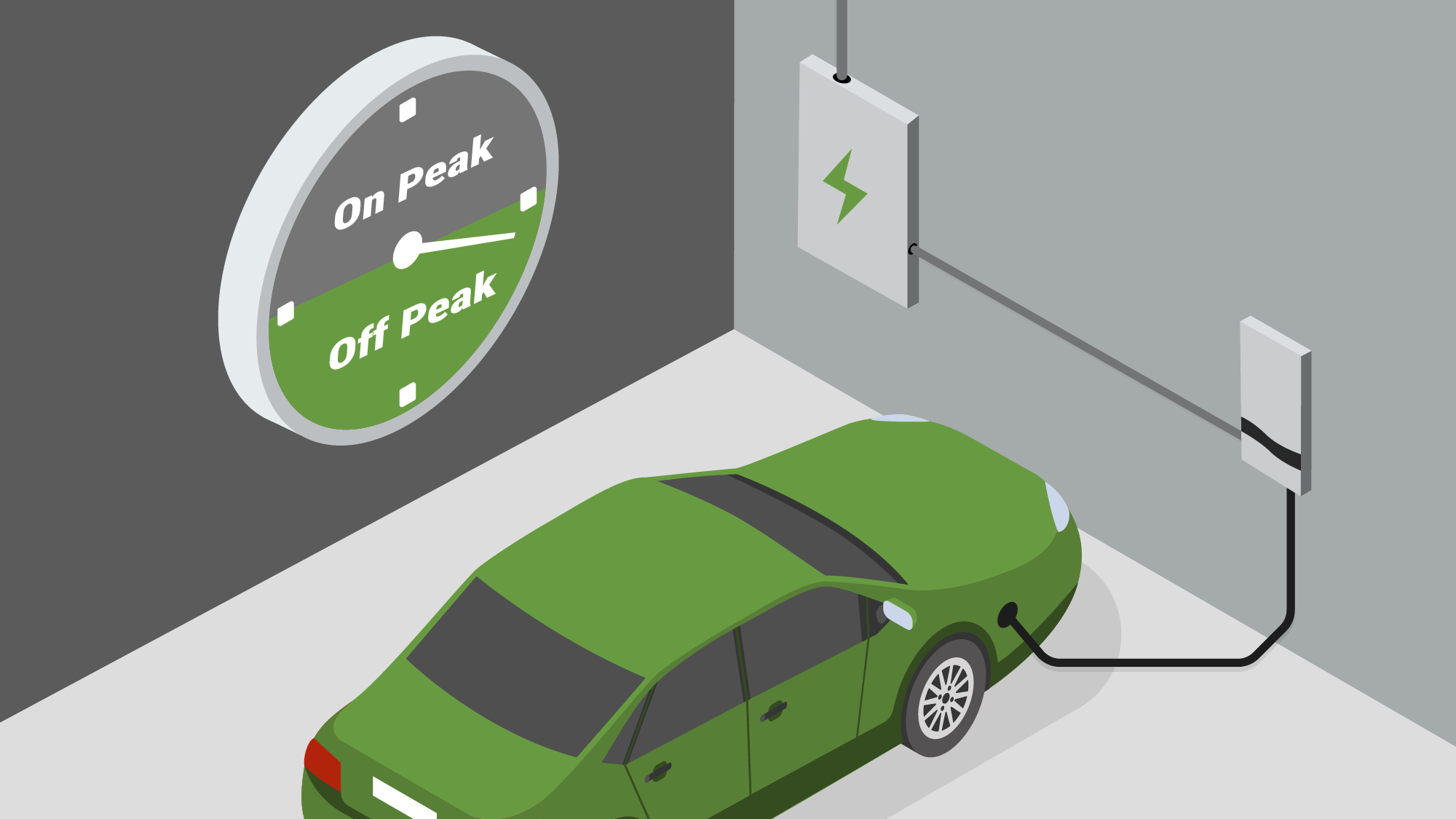
“Peak hours” are usually from roughly 4-9pm on weekdays when everyone comes home from work and school, cranks up the air conditioning, starts dinner, and critically for EV owners, plug in their cars. “Off-peak hours” are typically late night through early morning and weekends, when demand drops and electricity becomes much cheaper to produce and deliver.
Think of it like airline pricing: just as flights cost more during busy travel times, electricity costs more when everyone wants it at once.
Why Utilities Use TOU Pricing
Utilities need to design their system to meet peak demand even though less than 10% of electricity use occurs during the peak hours. It’s like building highways: they need to be wide enough to handle rush hour traffic, but for most of the day they’ll be relatively empty.
During high demand periods, utilities face several costly challenges:
-
Expensive generation: Often fossil fuel plants are brought online to meet the surge, increasing grid carbon intensity
-
Infrastructure costs: Additional generation capacity sits idle most of the time but must be available when needed
-
Market pricing: When electricity generators can’t increase production quickly enough, utilities must purchase extra electricity from other sources at higher wholesale prices
TOU pricing serves as a customer incentive to help spread out electricity demand. Even small shifts from on-peak to off-peak electricity usage can lead to savings. For utilities, this means fewer expensive peaker plants need to be built, and an overall more efficient grid.
There’s an environmental bonus too: off-peak hours coincide with when renewable power sources are at their strongest - at night when the wind blows hardest, and during the day when the sun shines brightest. Using more electricity during these hours taps into cleaner, more environmentally-friendly power sources.
Real-World TOU Rate Examples
The savings potential varies by region, but the pattern is consistent nationwide. Here’s what EV owners are seeing:
California leads the charge with some of the most dramatic differences in a region with already staggering electricity prices. Southern California Edison customers face peak rates up to 71¢ per kilowatt-hour (kWh) versus off-peak around 36¢/kWh, nearly a 2x difference.
Colorado just implemented new TOU rates that are particularly EV-friendly. Starting October 2025, Xcel Energy’s peak hours (5-9pm weekdays) will cost 2.7x more than off-peak rates. Even more importantly, TOU is now the default rate structure and customers must actively opt out if they prefer a static pricing.
East coast utilities are following suit. Some customers in Virginia save nearly 50% on electricity used between 11pm-6am, paying just $0.05631/kWh versus $0.11005/kWh during peak hours.
Nationwide, the trend is clear. Over half of U.S. electricity customers already have a TOU plan available to them, and the number of customers on TOU rates is growing rapidly as momentum builds behind them nationwide.
The Savings Breakdown For EV Charging
Let’s translate these rate differences into real dollars in your driveway. The math is surprisingly straightforward, but the savings are anything but small.
Consider an EV owner who drives a fairly typical 12,000 miles annually in a car that gets 4 miles per kWh (standard for most electric sedans). That’s 3,000 kWh of charging per year. Here’s where timing makes all the difference:
Peak charging scenario: At $0.20/kWh during peak hours, you’d pay $600 annually for charging.
Off-peak charging scenario: At $0.06/kWh during off-peak hours, that same charging costs just $180 annually.
Your annual savings: $420 just for plugging in later in the evening.
The real-world data backs this up. SRP customers in Arizona save 8.6% annually on average with their EV-specific rate plan. And plenty of EV owners see up to 30% savings per charge simply by scheduling charging overnight during off-peak hours.
For perspective on how good these rates are: with PG&E’s discounted rate, off-peak EV charging costs the equivalent of just $1.90 per gallon at the pump.
Plug your own numbers in to get a rough estimate of how much you might be able to save by optimizing your EV charging times:
Use our calculator above to estimate your specific savings potential based on your location, driving habits, and local utility rates. The results might surprise you, and most EV owners can save $300-$800 annually just by changing when they charge.
The beauty of these savings is that they compound over time. That $400 annual savings becomes $2,000 over five years, and $4,000 over ten years.
Beyond Just Savings: Additional Benefits
While the financial benefits grab attention, off-peak charging delivers value that goes far beyond your monthly electricity bill.
Environmental impact: California’s grid shows carbon intensity that’s almost 19x higher during peak hours compared to minimum levels, with “strong solar-driven dips in carbon intensity during midday, and sharp evening fossil ramp-up”. When you charge off-peak, you’re literally using cleaner electrons.
Grid stability: Peak demand shoots up just as the sun is setting on solar panels, forcing utilities to fire up expensive and dirty peaker plants to address spiking energy demand. By shifting to off-peak hours, you’re helping create a more stable, efficient grid for everyone.
Future-proofing: Momentum is building behind time-of-use rates, with many utilities making TOU the default option. Learning to optimize your charging now prepares you for a future where smart energy timing becomes even more important and profitable.
Making It Automatic: The Emporia Solution
The Emporia Classic Smart EV Charger solves the off-peak charging challenge by automatically scheduling your charging for maximum savings. No more midnight alarms, no more guesswork. Just plug in anytime and let our charger handle optimal timing and savings.
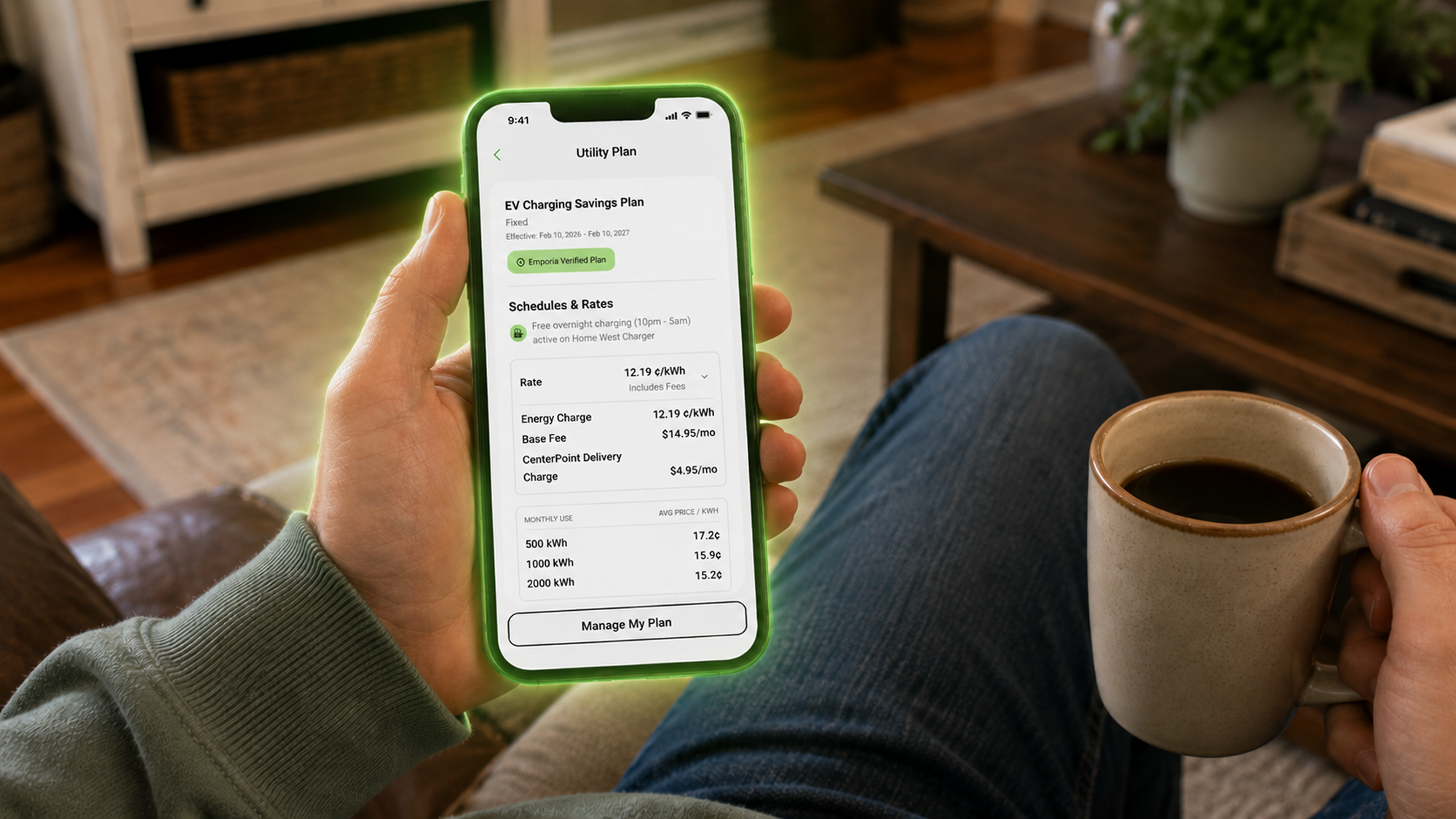
How it works: Simply select your utility plan with our Smart Saver feature, or manually input your utility’s rate schedule once through the intuitive Emporia app, and the charger takes over. It automatically delays charging until rates drop to off-peak levels, ensuring you always pay the lowest possible price. Whether your utility changes seasonal rates or adjusts peak hours throughout the year, the system adapts seamlessly.
Setup is simple: The Emporia app includes pre-loaded rate schedules for hundreds of utilities nationwide, so setup often takes just a few taps. Once configured, the charger handles everything, and all you have to do is plug in whenever convenient.
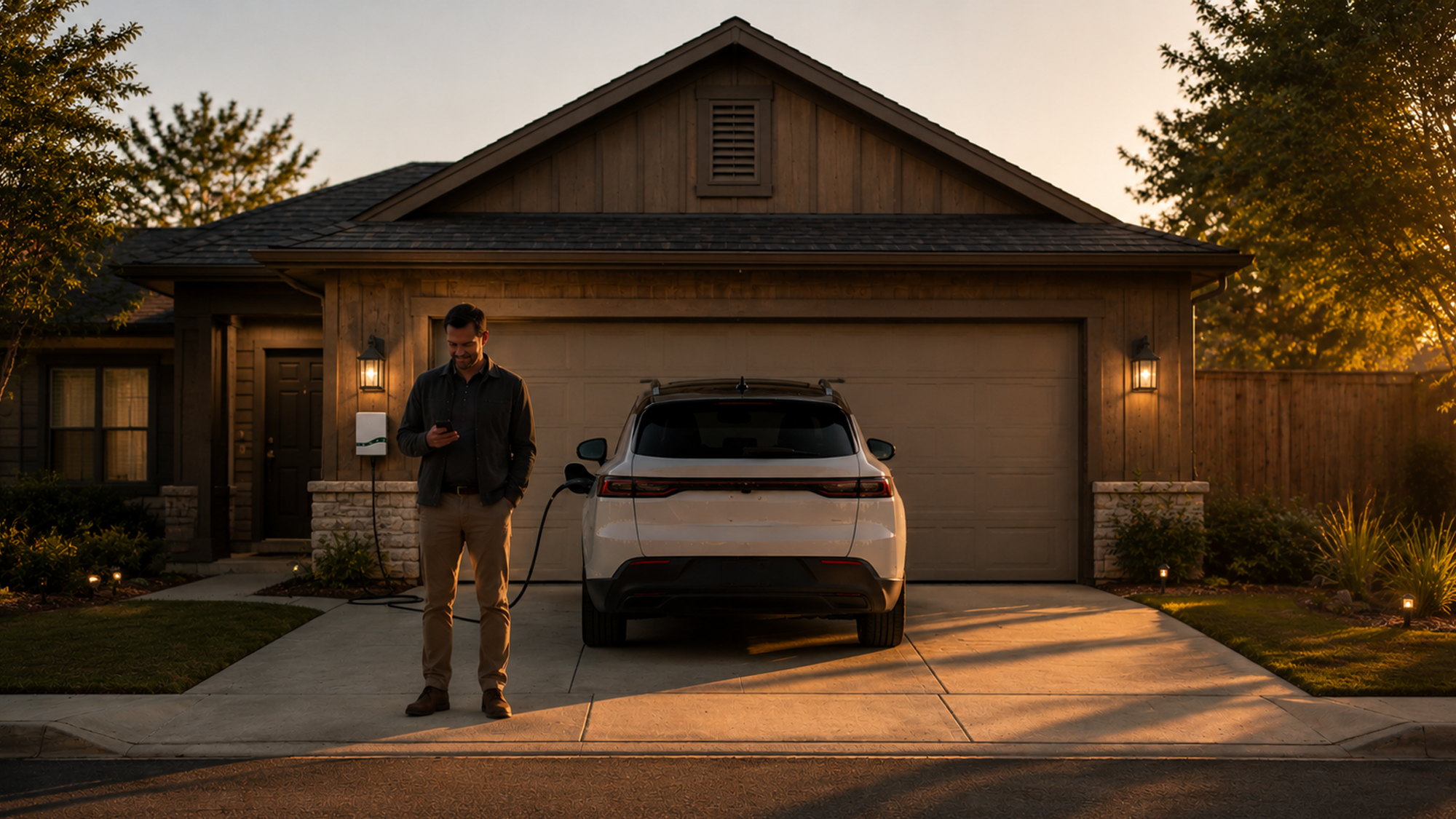
The elegance of this approach lies in how invisible it becomes. Your routine stays exactly the same, but behind the scenes the charger is working to minimize your costs while ensuring your EV is fully charged when you need it.
Getting Started
For Emporia EV Charger owners, setting up automated TOU optimization is straightforward:
-
Install your Emporia EV Charger (we always recommend working with a qualified electrician)
-
Download the Emporia app and create your account
-
In your charger settings, go to “Schedule” and input your utility’s TOU rate schedule or select from our pre-loaded utility database
-
Plug in anytime the charger automatically schedules charging for the cheapest available rates Track your TOU savings using the Emporia app’s detailed cost tracking. You’ll see exactly how much you save each month compared to peak-hour charging, with clear breakdowns showing the value of smart scheduling. Many customers are surprised to discover their actual savings exceed their initial estimates.
Transform your EV charging from a cost center into a savings engine. Your wallet will thank you every month, and you’ll wonder why you ever charged any other way.